Thinking About a Home in Canyon Lake, TX? 7 Questions to Ask Before You Fall for the View (2026)
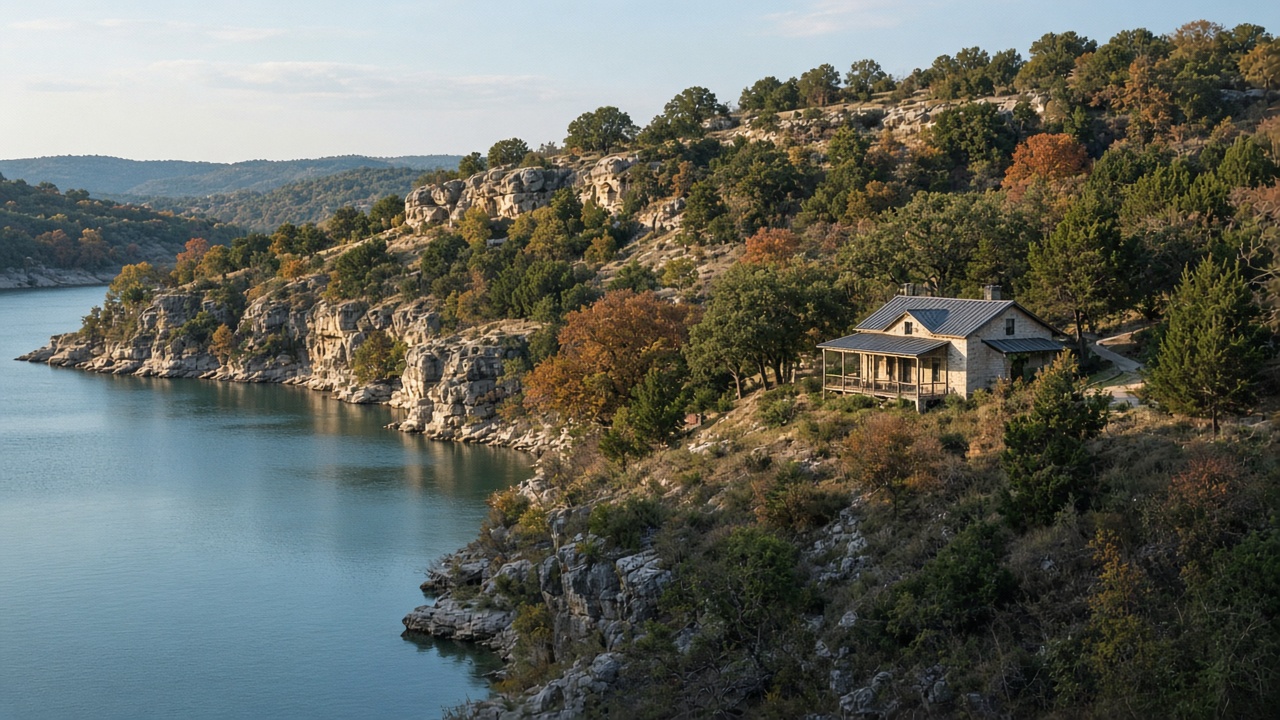
There's a moment almost every buyer has on a Canyon Lake showing. You walk out onto the back porch, the limestone bluffs open up, the water's sitting there blue-green below you, and you can feel yourself deciding. I get it. Canyon Lake is one of the prettiest places to live in the Hill Country, and it's just a short drive up FM 306 from New Braunfels.
But lake-area homes come with a few questions that a typical subdivision home in town doesn't. None of them are deal-breakers. They're just things you want answered before your option period runs out, not after. Here are the seven I walk every Canyon Lake buyer through.
1. Where does my property actually end?
This is the big one. The U.S. Army Corps of Engineers owns the land around Canyon Lake. So a home marketed as "lakefront" may actually border Corps land, not the water itself. The Corps' Canyon Lake office is clear that you can't build on federal property, and that includes docks, steps, ramps, and gazebos. Anything placed there without permission can be ordered removed at the owner's expense.
What to do: Get a survey that shows the government boundary, and ask the seller (or me) to walk you to the boundary markers. If you're picturing your own path down to the water, we'll confirm whether that's possible before you fall in love.
2. Is there a flowage easement on the lot?
Some private lots near the lake carry a flowage easement, which gives the government the right to flood that part of your land when the lake rises. These are generally tied to land below roughly the 948-foot elevation, but the exact line is often written into the deed by survey description rather than following a contour. You can't put a house or fill in that area, and building anything there takes a written request to the Corps office.
What to do: Read the title commitment closely for any flowage easement, and pull the deed history. It's one of those details that's easy to miss and hard to fix later.
3. How do the lake levels affect the view and access?
Canyon Lake is a flood-control reservoir, and its normal "conservation pool" is 909 feet above sea level. The level moves up and down through the year. As of November 9, 2026, Comal County's lake-level page showed it at about 907.3 feet, a little under normal. That means the shoreline you see in summer photos might look different on the day you tour, and boat ramp access can change too.
What to do: Look at the property in more than one season if you can, and check the current level on the Comal County lake level page before showings.
4. What septic system does the home have, and is it permitted?
Most homes around Canyon Lake aren't on city sewer. They use an on-site sewage facility (OSSF), which is the official name for a septic system. Comal County Environmental Health handles the permits, and their records can be searched online by address, subdivision, or owner. If the home has an aerobic system, it needs ongoing maintenance, so you'll want to see those service records too.
What to do: Ask for the permit and the license to operate, get any maintenance contract, and add a septic inspection during your option period. If you're dreaming of adding a bedroom, a pool, or a guest house, talk to the county first, because that can count as altering the system.
5. Where does the water come from?
Many neighborhoods around the lake get water from Texas Water Company (formerly Canyon Lake Water Service Company). Others are on a smaller water system or a private well drawing from the Trinity Aquifer.
What to do: Confirm the provider for that exact address and ask for recent bills. If it's a well, get the well log and a water test. Electric is often Pedernales Electric Cooperative, but confirm that one too and ask for 12 months of bills so you know what summer cooling really costs.
6. What about taxes, floodplain, and HOA rules?
Canyon Lake isn't an incorporated city, so there's no city property tax. You'll still pay county, school (Comal ISD for most of the area), emergency services district, and possibly other taxing units, so we'll look up the exact stack for the property. Separately, check the FEMA flood map for the address, because being on a hill doesn't automatically mean you're out of a floodplain near creeks and low-water crossings.
And read the deed restrictions or POA rules early. If you're planning a workshop, an RV pad, or a short-term rental, the restrictions in that specific subdivision matter more than anything I can tell you in general.
7. Is the road, the commute, and the lot itself going to work day to day?
Hill Country lots are gorgeous and they can also be steep. Look at drainage, retaining walls, and the foundation, and get a structural opinion if the inspector flags movement. Ask who maintains the road to the house. Then drive your actual work route at rush hour. Canyon Lake to New Braunfels, San Marcos, or San Antonio is very doable for a lot of people, but it's better to know than to guess.
The bottom line
Canyon Lake is a wonderful place to live, whether you want a full-time home, a quieter spot to retire, or a weekend place with a view. The buyers who love it most are the ones who asked these questions up front and knew exactly what they were getting.
If you're thinking about buying around Canyon Lake, or you're a Canyon Lake homeowner wondering what your place would sell for, I'd love to help. Reach out anytime and we'll walk through it together, no pressure.
For an even deeper dive on the 948-foot line, septic, and wells, my friends at Texas Home Talk put together a great guide: Buying a Home in Canyon Lake TX.
This post is general information, not legal or survey advice. Always confirm details for a specific property with the county, the Corps of Engineers, your title company, and a licensed surveyor or inspector.
Destini Evans
Realtor® · MAG Real Estate LLC · New Braunfels, TX
Helping families find their perfect home in Texas Hill Country. Whether you're buying, selling, or investing — I'm here to guide you every step of the way.